Potential US cross border estates and pitfalls
There is plenty of information around regarding setting up estates, optimizing inheritances for beneficiaries, the need for wills and powers of attorney, etc. However, I have found it extremely difficult to find information regarding what one can expect to encounter if one must settle an estate, with wills, power of attorneys, and beneficiaries listed. As such, here are some pitfalls that I have recently discovered when dealing with a cross-border estate. This post is based on the deceased individual having both Canadian and U.S. citizenships, with assets in both countries, entailing houses, mortgages, bank accounts, RRSPs, 401Ks, IRAs, CD’s, chequing and savings accounts. It is further based on the sole beneficiary being the spouse of the deceased, and that all accounts are held jointly. Your spouse passed away in Canada, in the Province of Ontario.
Let’s get started by examining bank accounts. Prior to your spouse’s passing, you held joint accounts in the U.S. and Canada. With your spouse’s passing in Canada, you will most likely start reverting your bank accounts in Canada from joint to a solely held account. This should be an easy undertaking. You will need to take the “funeral director’s statement of death” (which will be provided by the funeral home) with you, and the bank will change the accounts for you.
Now you will attempt to do the same in the U.S. This is where you will likely encounter issues you could not have dreamed up if you tried. Firstly, they may take the “funeral director’s statement of death”, but they will most likely request a full death certificate issued by the province, as proof of death.
This is problem #1. The province of Ontario will take up to 12 weeks to register the death and can take up to an additional 4 weeks to issue the certificates. You are now 16 weeks away, or nearly 4 months from being able to complete the task.
At the same time as you discover problem #1, you may also encounter problem #2 depending on which institution you bank with. In the U.S. while the bank account is held jointly, one of the joint account holders is the primary account holder. In the unlucky event that your deceased spouse was the primary account holder you may find that the banking institution that you deal with cannot place you as the primary account holder and remove your spouse’s name from the account. Should you encounter this situation, you will find that the account will be closed within roughly 60 days, depending on the institution, and that you will have to set up new accounts. In the interim, they will not process payments on the account as they cannot process payments for a deceased person. This problem can be easily avoided if dealt with at the time of setting up the account. If you are unsure as to how your institution will deal with the death of the primary account holder, my best advice to you is to contact the bank and have them send you a letter informing you of how they deal with the passing of the primary holder. If they cannot replace the primary holder, ask them to set up a mirror account on which the other spouse is the primary, or alternatively, change institutions to one that is able to ensure a smooth transition. From experience, I would not recommend leaving this to chance, as it is not a simple task to undertake while dealing with the passing of a spouse.
Moving on to credit cards. You figured that while you are dealing with the fact that your account has been frozen you can still have access to cash though credit cards. You might just be mistaken. Too often credit cards are only issued in one spouse’s name with the other spouse simply being a secondary account holder. As credit card companies have access to numerous sources of information, they will find out your spouse is deceased prior to you having a chance to notify them. If this is the case and you are the secondary account holder, be prepared to find out your credit cards have been cancelled without them even notifying you. My advice here, make sure the cards are held jointly, and that each spouse also has individual accounts, to ensure both have a credit rating. This holds true for both sides of the border.
Mortgages – these work in the same fashion as credit cards, as they are most likely tied with your financial institution. There is no easy way of ensuring that the surviving spouse will qualify for the mortgage once it is up for renewal. This is a tough issue, as if your life insurance coverage won’t cover the mortgage you may be faced with a serious dilemma especially if the house is worth less than the mortgage. My advice here is that if you intend on remaining in the house, you ensure that the life insurance coverage is sufficient to cover the mortgage and any other expenses.
RRSP’s – easily rolled over as part of the spousal roll over, however, this process can take up to 3 months. Be prepared for the wait. This can also easily be done with “funeral director’s statement of death”.
401K, IRA, and CDs. All of these are eligible for the spousal roll over, however, as they are held in the U.S. the “funeral director’s statement of death” will not do the trick. You are now back to waiting for the province’s full death certificate. Once they receive that, the process should be relatively straight forward.
Life insurance held in the U.S. – same as everything else U.S. related. They will need the province’s full death certificate and are likely to launch their own investigation. As a result, if you were counting on seeing the payout shortly after the death, you will find yourself disappointed. This process will take a minimum of 3 months and may go on for a longer period depending on the insurance company.
Being aware of all these issues, I would recommend (my recommendation and a token will get you on the TTC) you consider the following, if you have assets on both sides of the border:
1) Cash – make sure you have enough on hand. Ideally at a Canadian institution, due to the simplicity of dealing with the accounts. You will need to be able to pay all of the costs including burial while waiting to collect on insurance policies. These costs can be as low as $14,000 and as high as you let them get. You will not be able to bury your spouse without at least paying for the plot itself, along with the associated cost to dig and cover, and a religious representative to preside over the funeral. The funeral home may be more lenient and provide you with a payment plan or deferral.
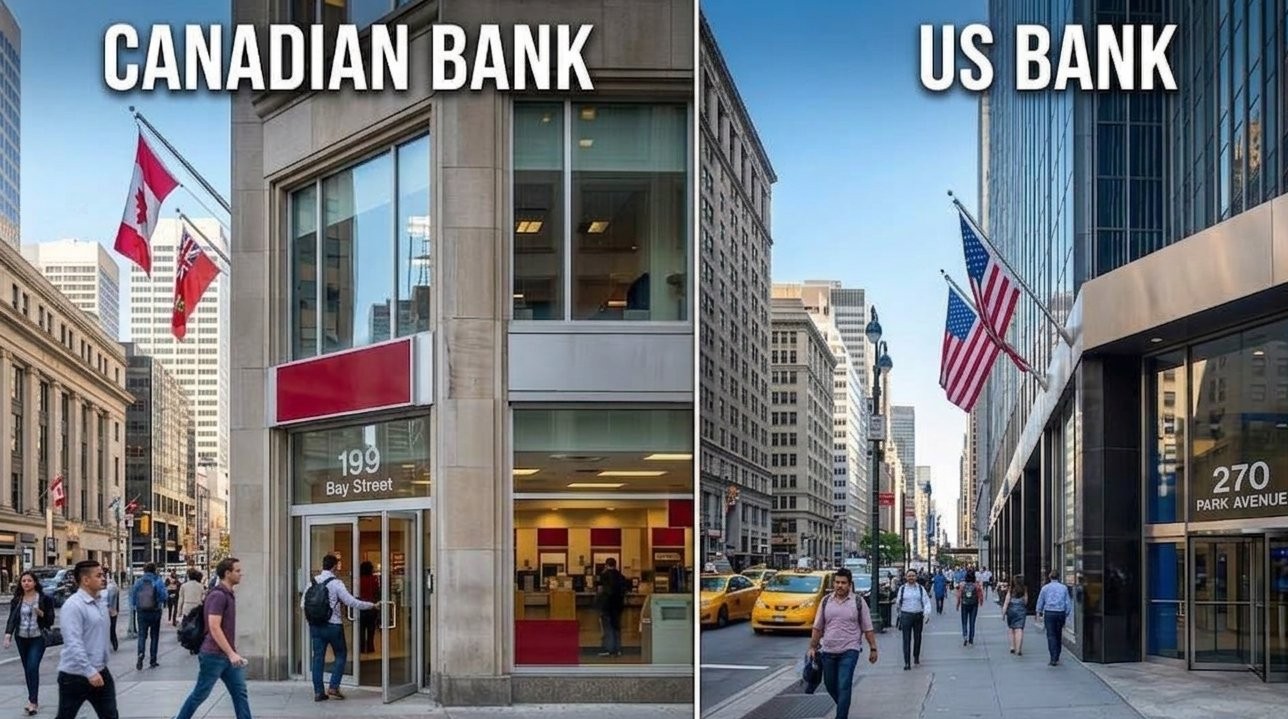
2) Banking – if you must bank in both countries, investigate banks such as RBC, BMO and TD. These banks allow you to hold accounts in multiple countries, in multiple currencies and perform transfers from one country to the other very easily. You can also see your account balances in all the various countries by logging in to a single online banking site. (I’m not selling their services, I’m just aware of some of the benefits)
3) Hold off on notifying US agencies of your spouse’s passing until after you have received the full provincial death certificate. Everyone is likely to request it, so trying to get ahead of yourself here, may cause unnecessary headaches. If you are receiving social security assistance, or any other form of government assistance, including pensions, do not spend the money they send for your spouse as they will expect to get repaid.
4) Do not submit your claim to a U.S. based life insurer until you have received the provincial full death certificate. They are not likely to pay out prior to receiving this, and their own investigation teams tend to be quite slow. Once you have this document it should be relatively straight forward to receive a payout, assuming there aren’t other issues with your policy.
5) Once you receive the provincial full certificate of death, look at receiving form DS-2060 “report of the death of an American citizen abroad” from the US consulate office. This can be submitted to the banks, insurance companies, etc. along with provincial death certificate to simplify the process. To receive this form, you will need to contact the closest U.S. consulate, provide them with the provincial death certificate, copy of the deceased SSN number, and photocopy of their passport, and/or citizenship certificate, and they will process the form within 1 to 2 days.
As always, make sure you have a will, power of attorney (both medical and financial), and beneficiaries listed on as many things as possible to avoid probate and other taxes. Make sure to discuss all of these with a qualified advisor.
I hope that you will never have to experience these hurdles firsthand, and may you find this article helpful. Below are some useful links: