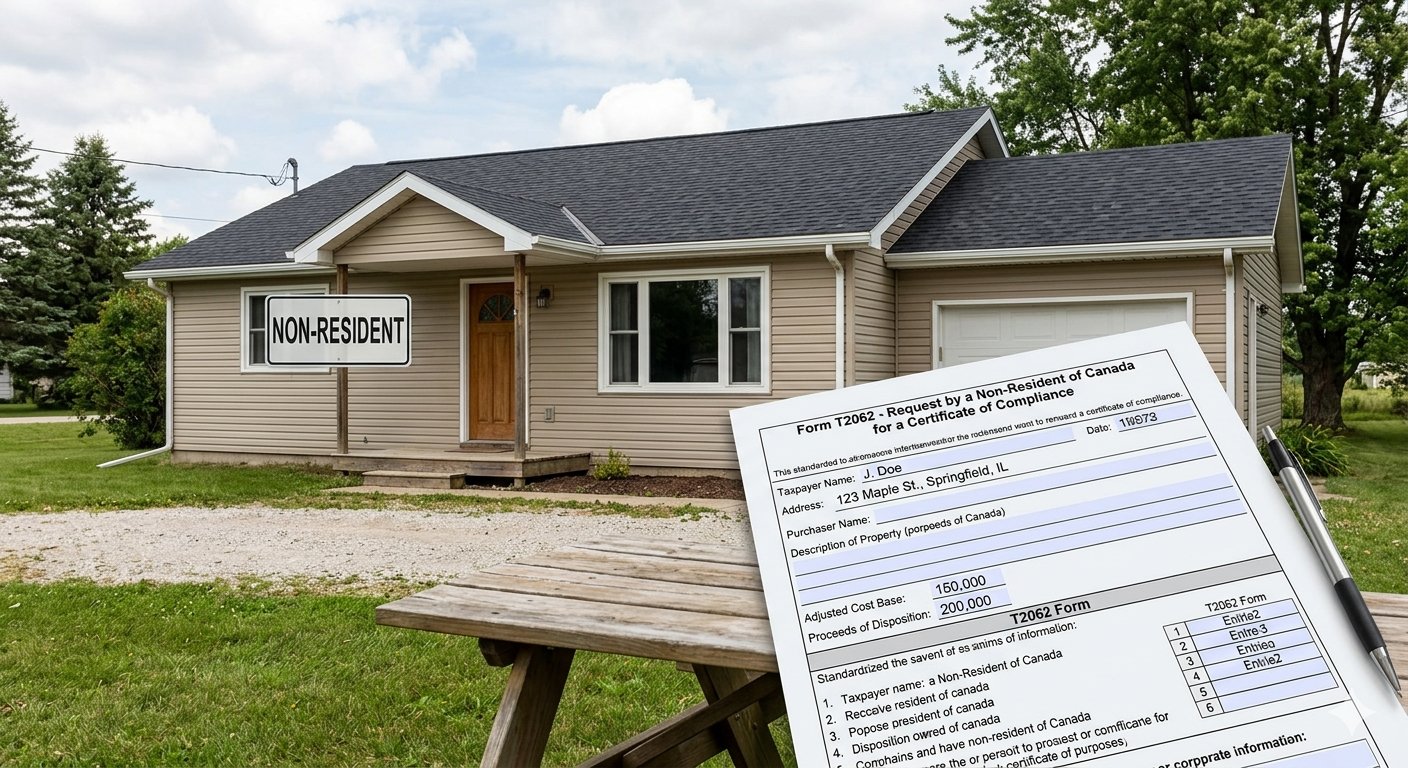
The following highlights the tax issues and process for the disposition of a property located in Canada by a non-resident.
Withholding taxes:
The purchaser of a property located in Canada from a non resident is required to withhold the following as applicable:
- 25% of the purchase price of non depreciable property
- 50% of the purchase price for depreciable property
The withholding is to be remitted to the Canada Revenue Agency (“CRA”) and it is the responsibility of the vendor to complete a T2062 clearance certificate and tax return to obtain a refund for over paid taxes. The withholding is typically held by the vendor’s lawyer.
T2062 clearance certificate:
The CRA requires that a clearance certificate application be submitted within 10 days of the closing of a sale. Failure to submit the application by the deadline results in a penalty of $25/day to a maximum of $2,500.
Who is required to submit a T2062 application:
Any non-resident seller is required to submit their own application. For instance, where spouses own the property jointly when sold and both are non-residents, a separate application must be submitted for each spouse.
T2062 processing timelines:
As of June 2023, the processing time to obtain a clearance certificate can range between 5 and 15 months depending on the situation. Vendors that have not rented their properties and have not filed tax returns in Canada containing rental income will have their clearance certificates processed faster.
The T2062 tax centre does not accept status update calls until 180 days have passed from the submission date, and a file number has been assigned. They return calls within 72 hours for those eligible for a call back.
How is the withholding calculated for the clearance certificate:
The calculation on the clearance certificate changes the withholding from 25% or 50% of the sale price to 25% of the gross profit on the sale and any depreciation claimed on the property. The gross profit allows for an adjustment to the cost of the property for closing costs on the purchase such as legal fees and land transfer taxes, however no deductions are allowed for selling costs such as realtor agent fees.
What happens to the amount withheld once a clearance certificate is applies for:
Once the CRA has reviewed the application they will either agree with the calculation on the application or amend as necessary. At this point the lawyers will submit the required payment to the CRA. The clearance certificate will not be issued prior to the CRA receiving the required funds.
Once the CRA approves the application and confirms receipt of the payment, a clearance certificate will be issued. Once received, the lawyers should send the remaining funds in your account to you. The funds cannot be returned to you prior to receiving the certificate and cannot be used for any other purpose.
Total tax obligations:
The actual tax obligation to the CRA can only be calculated by completing a tax return. That said, the CRA deems the amount calculated on the certificate to meet any and all tax liabilities associated with the sale. Should you believe your tax obligation is lower than the amount calculated on the certificate, you should complete a tax return for the year of sale and should there be a refund indicated on the return, the CRA will issue a refund payment to you.
Documentation requirements for a certificate:
The actual documentation requirements will vary, but the following are the general requirements.
Should you require a Social Insurance Number (“SIN”) you will need to provide the following, along with an application for a SIN:
- Full name
- Current address and mailing address if different
- Date of birth
- Country of birth
- Telephone number
- Certified true copy of each seller passport – if not in English it will need to be translated. Only originals are accepted
General requirements for a certificate:
- Purchase and Sale Agreements – from the purchase and sale of the property
- Statement of Adjustments and Trust Ledger – from the purchase and sale of the property
- Property Title – from the purchase and sale of the property
- The name of the purchaser and their lawyer and/or representative along with the address and phone number
- T216 returns – for each year property was rented where applicable
Should you wish to have us file your T2062 application, please contact us for a free consultation.