Some people that decide to take the giant step towards running their own business, believe that the first step involves setting up a corporation. But this may not necessarily yield the best results.
Below is a quick rundown of some of the advantages and disadvantages of a corporation and a sole proprietorship.
| Sole proprietor Advantages | Sole proprietor Disadvantages | Corporation advantages | Corporation disadvantages |
| Low cost to set up | Unlimited liability | Limited liability | Complex structure |
| Low ongoing cost | All income is taxed based on personal tax rates | Potential to reduce taxes | Expensive to setup |
| ` Simple to maintain | Harder to bring in outside investors or partners | Access to lifetime capital gains exemption of $800,000 | Expensive to maintain |
| Losses can be used to offset other income | Ability to bring on investors | Inability to offset losses with personal income | |
| All income is yours | More administrative work |
Paperwork, paperwork, and more paperwork.
This is what having a corporation can seem like at time. There is a misconception that owners of corporations can do as they wish with the corporation, and everything the corporation has. Unfortunately, this is not the case. A corporation has limited liability because the shareholder (business owner), and the corporation are each deemed to be separate legal persons. While you own it, you cannot do as you wish with it.
Here comes the paperwork. First, there are the articles of incorporation. These lay out the out the fundamentals on what and how the corporation can act. This is followed by resolutions. Resolutions to appoint yourself as a director and officer, along with anyone else, you deem is appropriate for the role. You will then need to consent to acting as a director. There’s the mandatory annual shareholder meeting, where you need to approve the corporation’s financial statements, and re-elect the directors. If your company’s financial statements will not be audited, then you will need a resolution for that as well.
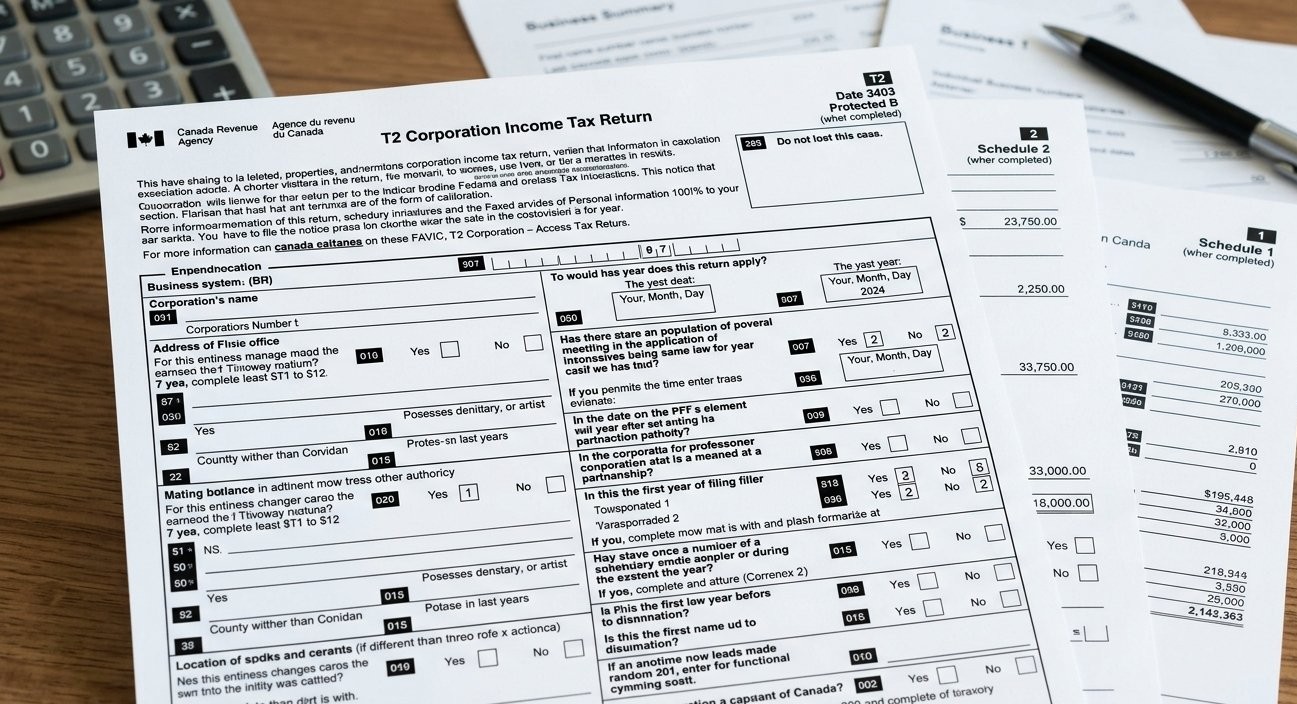
Now that the paperwork aspect is covered, let me discuss taxes. I will provide you with two real life examples, which will highlight how circumstances should dictate which way you go.
First, let’s meet Andrew.
Andrew is 34, single, and with no children and has decided to open an IT consulting firm in Toronto. Andrew expects to have a loss from the consulting firm of $7,000 in his first year. As a result, he will work part time on a contract basis earning $65,000. He needs all his income to live on.
Andrew chooses incorporation
Let’s see what happens if Andrew incorporates his business on day one. Andrew will pay a minimum of $400 if he chooses to incorporate the company on his own. He will incur an additional $2,500 minimum in his first year to produce his company’s financial statements, resolutions and corporate tax returns. His corporate tax return will show a loss of $7,000 + $400 + $2,500 for a total of $9,900 loss that can be carried forward 20 years. Andrew will also pay approximately $17,000 in personal taxes on his contract work including CPP, leaving him with $48,000 less the $9,900 he loaned his corporation, for a net cash position of roughly $38,100.
Andrew chooses sole proprietorship
Let’s see what happens if Andrew decided to set up his consulting firm as a sole proprietor instead. He would have income of $65,000 from his contract work, less the loss from his own firm of $7,000, and now his accountant cost would be a minimum of $1,500, leaving net income on his tax return of $56,500, on which he would pay taxes and CPP of roughly $14,000, leaving him with a cash position of roughly $42,500.
Andrew would be roughly $4,400 better off by starting out as a sole proprietor.
Now it’s time to meet Lianne.
Lianne is 42 years old, is married with 3 children. Lianne’s husband earns $90,000 per year, and their 3 children work part time. Lianne will establish her own media consulting company, and she is confident that she will earn $60,000 after expenses in her first year as she has significant contacts. She expects her company to grow from there. Unlike Andrew, Lianne only needs $15,000 of income to maintain her family’s lifestyle.
Lianne chooses incorporation
Let’s see what happens if Lianne incorporates her business on day one. Lianne will pay a minimum of $400 if she chooses to incorporate the company on her own. She will incur an additional $2,500 minimum in her first year to produce her company’s financial statements, resolutions and corporate tax returns. Her corporate tax return will show income of $60,000 less costs of $400 + $2,500 for a total income of $57,100. She will pay herself $15,000 in dividends. The company will pay roughly $7,000 in taxes (based on the small business rate of 15% in Ontario), leaving the corporation with cash of $50,100, from which it will pay Lianne a dividend of $15,000 leaving cash of $35,100 in the company. Leanne will pay no tax on her dividend income, netting her $15,000.
Lianne chooses sole proprietorship
Let’s see what happens if Lianne decided to set up her media consulting firm as a sole proprietor instead. Lianne will have income of $60,000 from her business, less her accountant cost which will be a minimum of $1,500, for net income on her tax return of $58,500. She will pay taxes and CPP of roughly $14,500, leaving her with a cash position of roughly $44,000.
Her financial position is roughly $6,100 better off by starting out as a corporation.
Here are a few more items to consider:
Lifetime capital gains exemption of $1,275,000 (“LCGE”) – This exemption is available on the sale of shares of a qualifying corporation. The details of what qualifies a corporation for the small business tax rate are beyond the scope of this piece. However, one of the considerations, is that the shares must be owned for more than 2 years. If your intent is to sell your company within the first 2 years, then setting it up as a sole proprietor, and converting the business into a corporation, will help alleviate this issue.
Passive income – if your business will generate its income from real estate, or investments, the company will not be able to use the small business rate. One exception exists where the company employs more than 5 full time employees. The tax rate on passive income is currently 50.17% but includes a refundable portion. The Liberal government is looking to penalize those that own corporations whose sole purpose is to earn passive income.
As you can see, the choice between starting a business as a sole proprietor or corporation, needs to be made based on your needs, and circumstances. Contact us to discuss your situation, and which route is preferable for you.