With another school year underway, I thought it would be fitting to kickstart a financial literacy posting series, with a simple introduction to tax. Please note, the below is based on Ontario residency. Credits vary by province.
How does tax in Canada work?
As most are aware, if you work or earn income then you will pay taxes. But how are taxes calculated and what do tax credits mean?
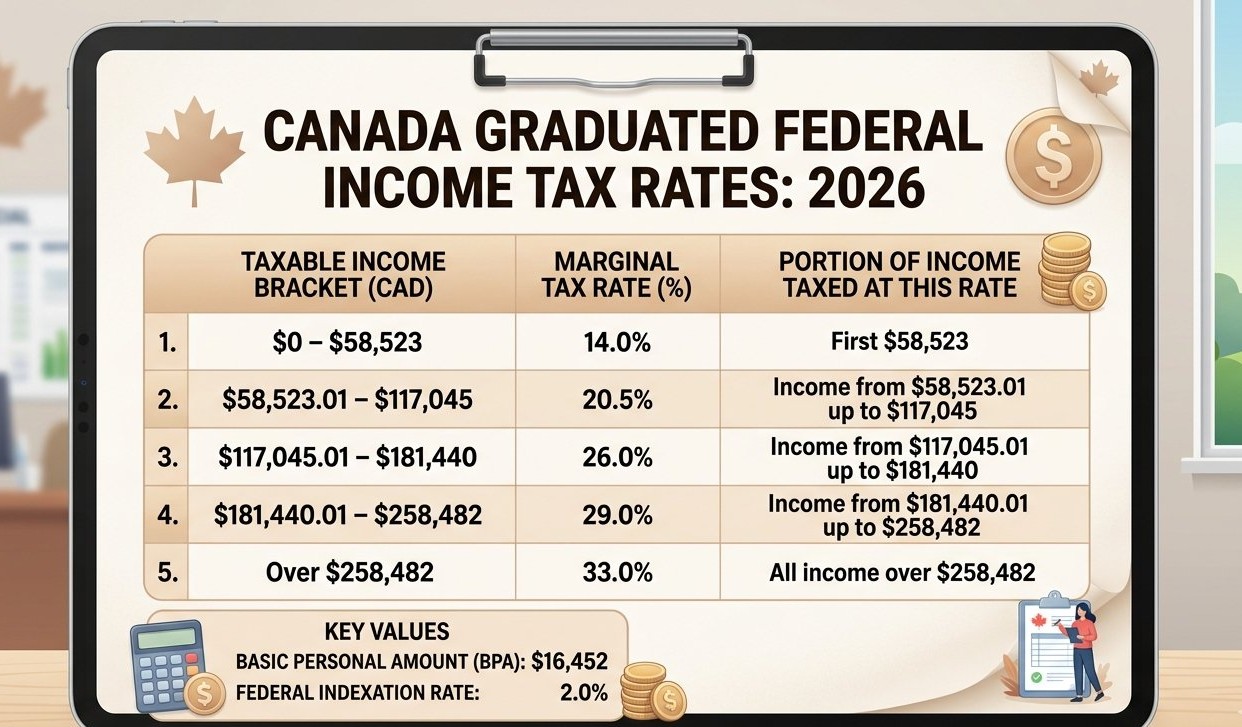
The Canadian tax system is based on graduated tax rates. The federal taxes for 2026 are based on the table below:
14% on the first $58,523 of taxable income,
20.5% on the next 58,522 of taxable income (on the portion of taxable income over $58,523 up to $117,045),
26% on the next $64,395 of taxable income (on the portion of taxable income over $117,045 up to $181,440),
29% on the next $77,042 of taxable income (on the portion of taxable income over $181,440 up to $258,482),
33% of taxable income over $258,482
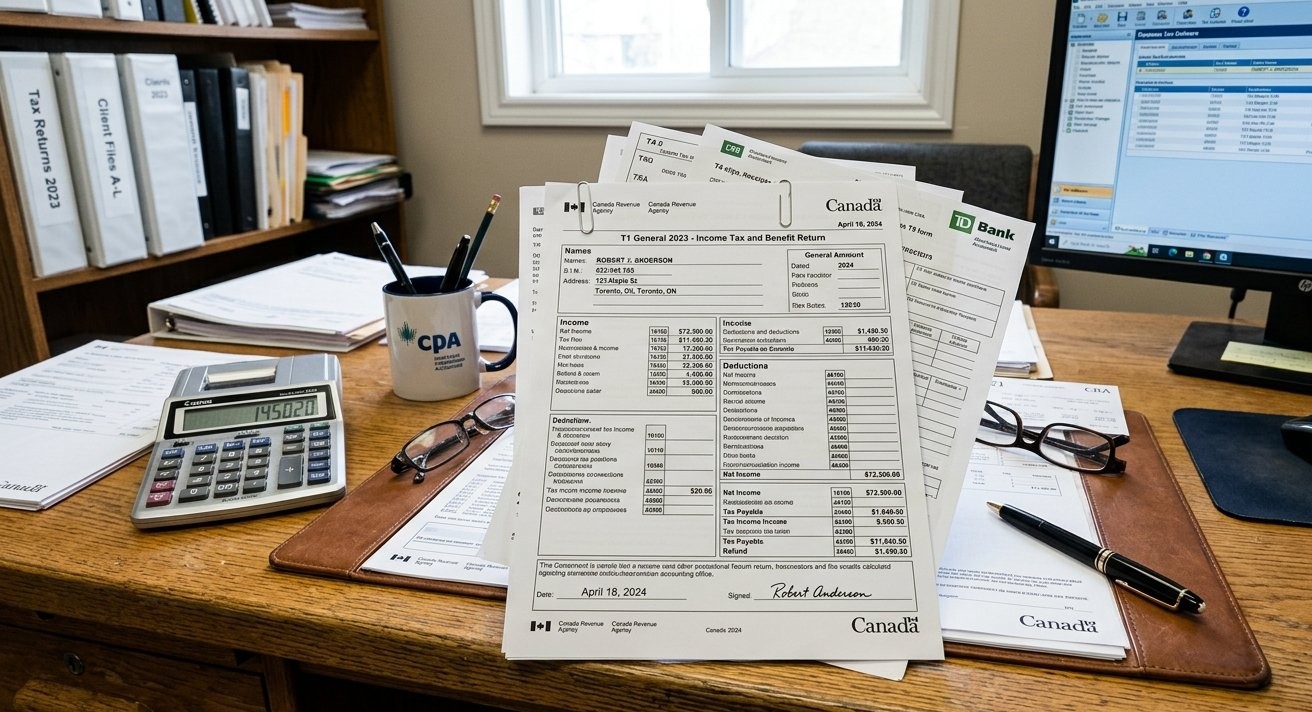
Which brings up the next question of what is taxable income?
Taxable income is your income after credits, and allowable deductions. Tax credits fall under two categories, refundable and non-refundable. Non-refundable tax credits are credit used to reduce your taxes payable, and where the credits exceed your taxes payable, your net tax is 0, meaning that you won’t get a refund for the excess. Refundable credits on the other hand, can be paid to you where your total credits exceed your taxable income.
Here are some common federal non-refundable credits:
Basic personal exemption – $16,452 – you do not pay any tax on the first $16,452 of income that you earn.
Spouse or common law partner credit – Same as the personal exemption, and is eliminated entirely when the spouse or common law partners earns in excess of $16,452, as they will use the credit personally
Canada Employment Amount Tax Credit – A credit of $1,501 on the first $1,501 of income earned
OSAP interest credit – based on interest paid on OSAP loan
Let’s assume you earn $58,523 for 2026, and are entitled to your basic exemption, along with the Canada Employment Amount. Your total non-refundable credits will be $17,953. Your taxable income is then $40,570 ($58,523 – $17,953). At a 14% tax rate, will equal to taxes payable of $5,679.80. If the tax deducted from your pay is greater than $5,679.80 you will get a refund, and if it is lower you will owe tax. Note that this calculation does not include provincial income taxes.
You should note that the non-refundable credits are calculated using the lowest rate of 14%.
Let’s say that you are a full-time student in 2026 in a qualifying program with tuition cost of $10,000. Let’s further assume, that you worked during the summer, and earned $12,000.
Your total non-refundable tax credits would be $27,953, whereas your income is $12,000. Accordingly, any taxes that were withheld from your pay over the summer, will be refunded to you on your 2026 tax return.
The only credit that will carry forward will be your tuition credit of $10,000, as your basic exemption exceeds your income.
Ontario refundable taxes – Ontario Trillium benefit
The Ontario Trillium benefit is made up of 3 credits:
Ontario sales tax credit – Maximum of $378 – for each spouse and dependant children under 19
Ontario Energy and Property Tax Credit – Maximum of $1,307/family and $1,488 for seniors.
Northern Ontario Energy Credit – Maximum $189 for a single person and $290 for families. This credit is available to those living in Northern Ontario, to help alleviate the higher cost of home heating
The rent credit is calculated based on 20% of the total rent or property taxes paid. If you rent or property taxes exceed $3,980/year, then you will receive the maximum. As you can see, inflating the rent you paid, will not likely increase your refundable credit.
Once your income exceeds $29,047, the property credit is reduced by 2% of the income above this amount.
If you have any questions or concerns or need help with your taxes please contact us.