
Overview
The decision of some high-profile Canadians such as Gad Saad and Emmanuel Moss to leave Canada over rising antisemitism, exposed a tax many were not aware of. The tax, often called ‘Canada’s exit tax’, essentially taxes gains on assets owned in Canada up to the date of becoming a non-resident. The Income Tax Act views a taxpayer to have a deemed disposition on becoming a non-resident for tax purposes, same as what occurs on death.
A deemed disposition is legal fiction. You haven’t sold anything and yet you are expected to pay tax on gains that have not materialized. The rationale behind the tax is that your wealth has increased while you lived in Canada and living in Canada has benefitted you financially. The exit tax is not unique to Canada.
With this in mind what is taxable and what is not, and how is it taxed?
Items that aren’t taxed on departure:
- Real estate – discussed in further detail below
- RRSP, TFSA, RESP, RRIF
Items that are taxable on departure:
- Nonregistered investment accounts
- Foreign owned real estate
- Shares of private corporations
- Personal valuables such as art, jewelry, collectibles – but only where the value of each item exceeds $10,000
The gain on any taxable items is taxed as a capital gain, meaning 50% of the gain is taxable. The tax rate at which it is taxed will vary, as it depends on the tax bracket you are in. All the taxable gains along with any other taxable income that you have in the year up your departure date are combined and taxed on your departure return.

Real Estate
Let’s have a look at Canadian real estate and how taxation of real estate works. While Canadian real estate is not taxed on departure it is taxed when it is ultimately sold. If you choose not to pay taxes on Canadian real estate on your departure return you may face the following issues:
• Principal residence exemption – this exemption is only available while you are a resident and utilizing the property as your ordinary principal residence. If you report a disposition of your principal residence on your departure return, there will be no tax as it is exempt and you can use the fair market value on departure as the cost base for both the country you are moving to and when you actually dispose of it.
• Investment properties – if you choose to defer the taxation of any gains on investment properties to when they are sold you can encounter the following situation. Canada will tax the entire gain as would be the case regardless. The country that you are now a tax resident of may tax the entire gain as well as there was no tax paid on exit. If your new country of tax residency has higher tax rates you will potentially overpay taxes.
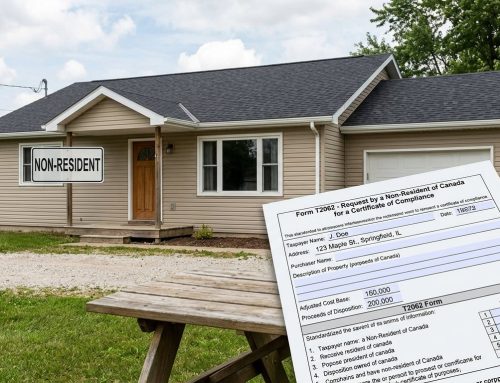
• Selling Canadian real estate as a non-resident will require filing a T2062 Certificate of Compliance which is a complex and time-consuming process during which a not insignificant amount of funds will be retained between your law firm and CRA as insurance against taxes owing.
Registered Accounts
RESPs
- You will forfeit all government grants in the account if the beneficiary is a non-resident when starting their post-secondary education
- 25% withholding tax will apply when amounts are disbursed to a non-resident beneficiary
- The country where you are currently a tax resident may not recognize the tax deferral status of the account creating reporting and tax obligations in your new country of residence
- Generally you cannot make contributions or receive grants while the beneficiary is a non-resident of Canada
TFSA
- Non-residents cannot make contributions to a TFSA
- Your new country of residence may not recognize the tax status of a TFSA account and may tax any earnings in the account following departure
- You can withdraw any amount from a TFSA while outside of Canada and create new contribution room for the following year by the withdrawn amount, however, as a non-resident you will not be able to recontribute until such time that you become a Canadian tax resident again.
RRSPs
- Once you become a non-resident you generally cannot make any further contributions to an RRSP
- Withdrawals will trigger a 25% withholding rate but might be lower depending on whether a tax treaty exists between Canada and your new country of residence.
- Can file a Section 217 tax return to tax RRSP withdrawals as Canadian income if it reduces taxes payable allowing you to recover a portion of the withheld amount.
- There may be complications, filing requirements, tax consequences in your new country to recognize the tax status of the RRSP account.
- Complications and tax consequences once the RRSP converts to a RRIF which is mandatory by age 71.
Canadian Private Company Shares
- While a resident of Canada your shares in a Canadian private company may be eligible to the lifetime capital gains exemption (“LCGE”) of $1.25 million for 2026 should the company meet the requirements.
- Should you along with other shareholders who own more then 50% of the corporation, all become non-residents of Canada the Corporation will no longer be considered a Canadian Controlled Private Corporation (“CCPC”). This will result in a deemed year end for the corporation on your date of departure, and the elimination of the small business deduction.
- Planning will also be needed on how to best receive renumeration from the Corporation following departure to minimize taxation.
- You will need to consider whether the corporation’s business can be maintained with you leaving Canada or whether a sale of the corporation may be prudent.
- Planning is required to ensure the Corporation meets the LCGE criteria to reduce departure taxes.
Exiting Canada requires cautious tax planning to minimize the departure tax while factoring in the tax implications in the country you are planning to move to along with potential outcomes should you choose to return to Canada. Should you require assistance in planning your departure to determine your tax residency and effective efficient tax planning to minimize departure taxes please contact us. We specialize in tax planning for immigration/emigration for Israel, Thailand and the U.S.